

Thermal Infrared Camera Guide (2026)
A detailed guide covering the scientific principles, technical specifications, and operational considerations necessary to select the correct radiometric thermal imaging system for your application.
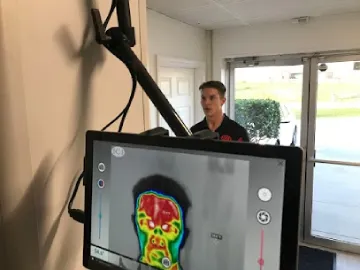
The Science of Thermal Measurement
To select the correct equipment, you must first understand the underlying physics. The core function of a thermal imaging unit is not temperature measurement, but the ability to detect and measure specific bands of infrared (IR) radiation emitted by an object.
Infrared instruments do NOT measure temperature directly. They measure Infrared (IR) Radiated Energy only. Thermography is the advanced discipline concerned with the acquisition, storage, and analysis of this radiated energy. Always confirm the technical specifications and the exact method of measurement (e.g., dedicated thermal camera vs. generic infrared illuminator) before making purchasing decisions. Never use specialized equipment (like infrared cameras) if basic night vision or simple IR illumination will suffice.
Emissivity (ε) and Spectral Analysis
Emissivity dictates how efficiently a surface emits thermal energy. Understanding the material's typical emissivity value is crucial for accurate readings. The unit must allow for manual, accurate emissivity adjustment across all expected materials. If this setting cannot be accurately adjusted, the resulting thermal map will be unreliable, especially when scanning non-ideal or unknown surfaces.
Furthermore, confirm the camera's operational wavelength range, as different IR bands are sensitive to different materials and temperature ranges.
Qualitative vs. Quantitative Measurement
The primary factor when purchasing a thermal camera is understanding how it defines diagnostic capabilities, specifically distinguishing between qualitative and quantitative measurements:
-
Qualitative Measurement
This technique captures and evaluates thermal images by focusing on thermal contrast. Rather than identifying a precise numerical value, its main objective is to pinpoint where anomalies or temperature differences occur.
-
Quantitative Measurement
This involves capturing images that provide accurate, verifiable temperature data. Such a feature is essential for applications like safety compliance, process control, or research and development, where exact temperatures or precise differentials must match a specified operational range.
Key Factors to Consider When Purchasing an Infrared Thermal Camera
| SPECIFICATION | MEANING | BEST OPTION |
|---|---|---|
| NETD (Noise Equivalent Temp Diff.), Camera Sensitivity |
The camera’s sensitivity. This is measured in milliKelvins. Kelvin is an absolute zero temperature scale. The camera’s mK can be converted to Celcius, which is the smallest temperature difference the camera can see. 100mK = 0.1°C 25mK = 0.025°C Degrees Celsius (°C) = Millikelvins (mK) / 1000 |
Lower is better. This dictates the smallest temperature difference the camera can reliably detect. |
| Emissivity Adjustment | The camera’s ability to compensate for different surface materials (e.g., painted vs. metal). | The camera’s ability to compensate for different surface materials (e.g., painted vs. metal). Must be adjustable. If you cannot correctly set the emissivity, every single reading is compromised. |
| Accuracy | The deviation of the measured temperature from the true temperature. | Aim for industry-standard accuracy (e.g., ±2° C). Anything higher risks inaccurate data. |
| Format Output | The standard digital image or video output. | Ensure the output data is compatible with existing inspection or analysis workflows. JPEG or PNG is common for images, while H.264 is common for videos. |
| Detector Resolution / Thermal Resolution / Focal plane array (FPA) resolution |
Resolution indicates the number of pixels captured by a detector. Just like your television, resolution is determined by the number of pixels in a grid. The more pixels, the more detailed the image or video. While a higher resolution reveals more details, detectors under 100 pixels wide produce blurry images, often failing to detect small thermal anomalies. |
A minimum of at least 160x120 is recommended. Professional quality resolution starts at 320x240. High Definition starts at 720p. The resolution needed is determined by the type of application. |
| Refresh Rate | Refresh rate determines how smooth motion looks over time in video. | Exporting cameras with higher than 9Hz outside of the USA may be restricted or require additional documentation to get approval. A 30Hz to 60Hz frame rate is fast enough to render smooth video motion. The refresh rate is only applicable to video and not images. |
Other Considerations
- Workflow Integration: Assess how well the device integrates into the existing operational environment (e.g., portable vs. fixed station).
- Data Logging: The capacity and method of secure, detailed data logging.
- Portability: The battery life and operational weight for field deployment.
- Software Suite: Insist on a full, unrestricted software suite. Beware of “lite” versions that limit analysis. The software must support multi-user functionality without hidden licensing fees.
- Service & Calibration: Prioritize manufacturers with local Calibration and Repair centers. If a critical unit needs shipping overseas for service, the downtime can halt your operations entirely.
- Training & Protocol: The equipment must be paired with mandatory, accredited Level I, II, or III training. The expert operator is the most valuable component of the system.
- Safety & Compliance: For medical applications, demand proof of FDA 510k Clearance. For other critical areas, understand local industry codes (NFPA, etc.).
If you have any questions feel free to contact us to discuss the best infrared thermal equipment for your application.